

Transparent Checkpointing

The Transparent Checkpointing Operator is an essential component of MemVerge.ai software and a human-centered enterprise AI factory that is resilient and flexible.
With the ability to suspend and resume jobs, workloads can surf GPUs for available capacity, hot-restart after node maintenance, and burst into another department’s GPUs during periods of peak usage.
The bottom line is GPUs can fail, and enterprises need the ability to migrate workloads. The results are lower computing cost with greater workload resilience and performance.
Transparent Checkpointing Overview
Use Cases
The following are just a few use cases for Transparent Checkpointing. Also, checkout tools and use cases for GPU Orchestration and Intelligent Memory.




Technology
The following are descriptions for technology under the hood of the MemVerge.ai Transparent Checkpointing module.

Transparent Checkpoint Operator for Kubernetes
Kubernetes offers agility, but its dynamic nature can be disruptive for stateful and long-running AI/ML tasks. Traditional approaches to fault tolerance require complex application refactoring, increasing development cycles and technical debt. MemVerge’s Transparent Checkpoint Operator eliminates this burden, allowing your data scientists and engineers to focus on innovation, not infrastructure resilience.
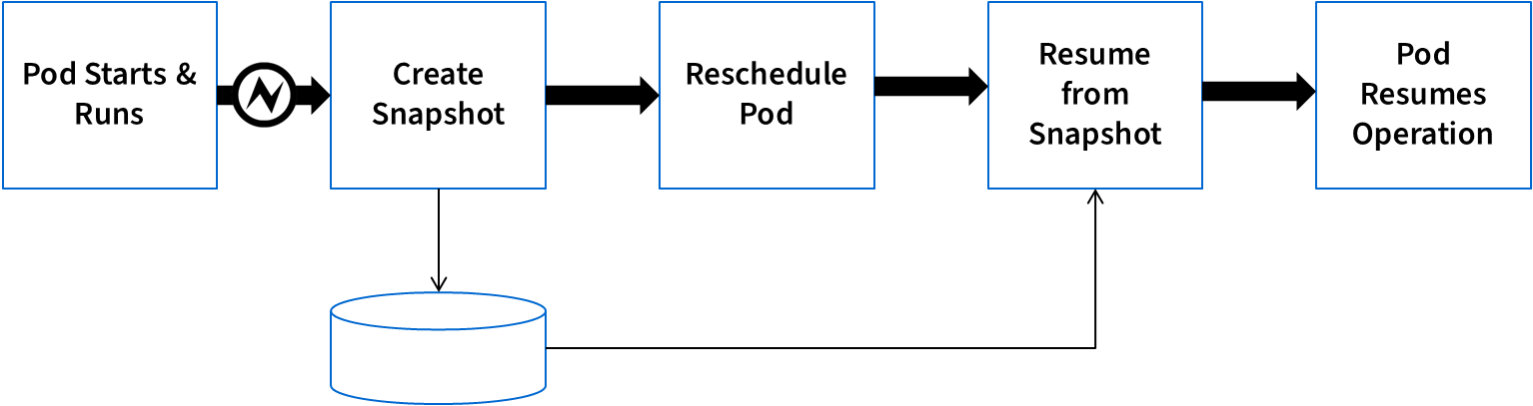

Full Snapshot of Application State
The MemVerge Transparent Checkpoint Operator integrates seamlessly into your Kubernetes environment. Leveraging Kubernetes-native events, it automatically triggers a full snapshot of an application Pod’s state – including memory, CPU, network connections, and file system – when a disruption occurs (like a Pod termination or node drain). When the Pod is rescheduled, the operator automatically restores it from the saved snapshot, allowing your AI/ML job to continue precisely where it left off.